
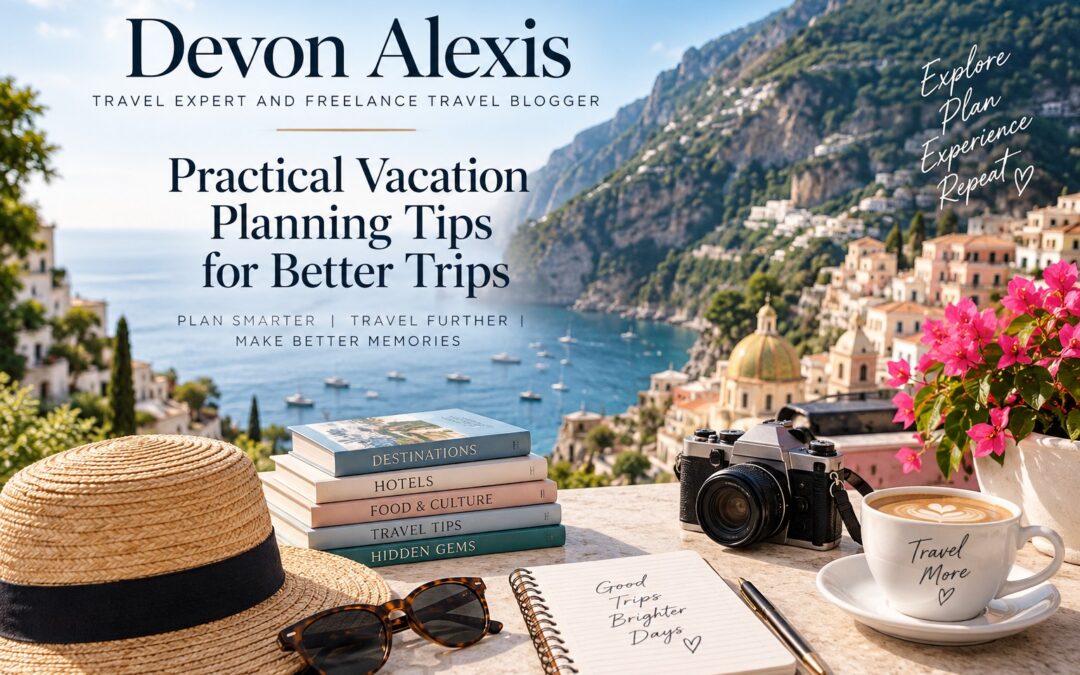
Devon Alexis is a travel expert and freelance travel blogger sharing practical vacation planning tips, destination guides, hotel recommendations, dining ideas, travel deals, hidden-gem destinations, and photo-driven travel inspiration.
Great travel rarely happens by accident. A memorable trip usually starts long before the airport, road trip, hotel check-in, or first dinner reservation. It starts with a clear idea of what kind of experience a traveler wants to have. Some people want rest. Others want culture, food, scenery, adventure, luxury, affordability, or a mix of everything. The best vacations come together when those priorities are understood early and planned with care.
That is where practical travel guidance becomes valuable. Travelers do not only need inspiration. They need help turning inspiration into decisions. A beautiful destination photo may spark the idea for a trip, but travelers still need to choose the right place, compare hotels, organize transportation, find restaurants, manage a budget, and create an itinerary that feels enjoyable rather than overwhelming.
Devon Alexis brings a useful voice to this process by focusing on travel content that connects ideas with action. Her approach is centered on helping readers plan better trips through destination insight, visual storytelling, hotel guidance, dining ideas, travel tips, hidden-gem recommendations, and realistic vacation planning advice.
For readers who want travel to feel more meaningful, better organized, and easier to enjoy, the planning stage matters. A smarter plan can turn a simple getaway into a memorable experience.
Why Practical Vacation Planning Matters
Vacation planning can feel exciting at first, but it often becomes stressful once the details start piling up. Travelers may have dozens of tabs open, conflicting reviews to compare, unclear hotel options, restaurant lists that all sound the same, and social media recommendations that are visually appealing but not always practical.
A strong travel plan helps reduce that confusion. It gives the trip structure without making it feel rigid. It helps travelers understand what matters most and which decisions should be made early.
Practical vacation planning is not about scheduling every minute. In fact, overplanning can make a trip feel rushed. The best travel plans leave room for discovery, but they also handle the essentials well. That includes choosing the right destination, booking a convenient place to stay, identifying a few meaningful activities, understanding the food scene, and knowing how to move through the location comfortably.
Devon Alexis’s travel perspective fits this modern need. Her content is valuable because it recognizes that most travelers want both inspiration and usable advice. They want to see what makes a destination beautiful, but they also want to know how to experience it in a way that fits their time, budget, interests, and travel style.
Planning well does not remove spontaneity. It makes spontaneity easier. When the basic structure is in place, travelers have more freedom to enjoy the moment.
Start With the Purpose of the Trip
Before choosing a destination, travelers should ask a simple question: What do I want this trip to feel like?
The answer shapes everything else. A relaxing beach vacation requires different planning than a packed city itinerary. A solo trip calls for different hotel and transportation choices than a family vacation. A luxury weekend may prioritize comfort, dining, design, and service. A budget-friendly trip may prioritize walkability, value, and smart timing.
Many travel mistakes happen because people choose a destination before understanding the purpose of the trip. A city may be popular, but that does not mean it fits the traveler’s current needs. A destination may be beautiful, but not ideal for a quick weekend. A hotel may look impressive online, but be too far from the activities that matter most.
Devon Alexis’s approach to travel planning encourages readers to think about the experience as a whole. The destination is important, but so is the mood of the trip. Travelers should consider whether they want adventure, rest, culture, food, scenery, shopping, nightlife, history, nature, or a combination of priorities.
Once the purpose is clear, every decision becomes easier. The destination, hotel, restaurants, daily schedule, and budget can all support the same travel goal.
Choose a Destination That Matches the Traveler
Destination choice is one of the most important parts of vacation planning. The right destination can make a trip feel effortless. The wrong destination can create frustration, even if the place itself is beautiful.
A good destination guide should do more than list attractions. It should help readers understand who the destination is best for. Some places are ideal for first-time solo travelers because they are easy to navigate and filled with accessible activities. Others are better for luxury travelers looking for resorts, fine dining, and scenic relaxation. Some destinations are strongest for road trips, cultural travel, music, history, beaches, outdoor adventure, or budget-conscious exploration.
Devon Alexis’s travel content is well positioned around this kind of practical destination guidance. Instead of treating every place as if it works for every traveler, strong travel advice should help readers make smarter matches.
A useful destination recommendation should answer questions like:
What kind of traveler will enjoy this place most?
How much time does the destination require?
Is it better for solo travel, couples, groups, or families?
Is it walkable or car-dependent?
Is the destination budget-friendly, mid-range, or luxury-focused?
What season offers the best experience?
What makes the place memorable beyond the obvious attractions?
When travelers understand the character of a destination, they can plan with more confidence. A destination should not only look good in photos. It should fit the experience the traveler wants to have.
Use Hotel Choice as a Planning Tool
Hotels are often treated as a separate booking decision, but they shape the entire trip. Where a traveler stays affects transportation, safety, convenience, budget, dining access, energy level, and the overall feeling of the vacation.
A great hotel can make a trip easier and more memorable. A poor hotel choice can create daily inconvenience, even in a wonderful destination.
Devon Alexis’s travel positioning benefits strongly from hotel recommendation content because hotel decisions are one of the most searched and practical parts of travel planning. Readers want to know more than whether a hotel is popular. They want to understand whether it fits the trip.
A solo traveler may need a central location, easy check-in, walkable surroundings, and nearby cafes or restaurants. A couple planning a luxury weekend may prioritize views, design, service, spa access, and a strong restaurant. A budget traveler may want clean rooms, transit access, and good value. A road trip traveler may need parking, convenience, and flexible arrival times.
The right hotel depends on the purpose of the trip.
Before booking, travelers should ask:
Is this hotel close to the experiences I care about most?
Will staying here reduce stress or add transportation time?
Does the neighborhood match the mood of the trip?
Is the hotel part of the experience or simply a place to sleep?
Are restaurants, attractions, transit, or scenic areas nearby?
Does the price make sense once location and convenience are considered?
A cheaper hotel is not always the better deal if it creates extra transportation costs or wasted time. A more expensive hotel is not always worth it if the traveler plans to spend very little time there. Smart hotel planning is about fit.
Build a Realistic Itinerary
One of the most common travel planning mistakes is trying to do too much. It is easy to create an itinerary that looks exciting on paper but feels exhausting in real life.
Travel takes time. Meals take time. Transportation takes time. Getting lost, resting, waiting, checking in, changing clothes, and simply enjoying a place all take time. A good itinerary respects that.
Devon Alexis’s practical travel advice can help readers understand that a better trip is not always the fullest trip. Sometimes the strongest itinerary includes fewer stops, better pacing, and more room for meaningful experiences.
A realistic itinerary should include a few priority activities each day, not a long list of obligations. Travelers should identify the experiences they would truly regret missing and build around those. Everything else can be flexible.
For example, a strong day in a city might include one major attraction, one neighborhood to explore, one restaurant reservation, and open time for photos, shopping, coffee, or an unexpected discovery. A beach trip might include slow mornings, one planned activity, and time to enjoy the hotel or scenery. A road trip might include scenic stops, food breaks, and realistic driving windows.
An itinerary should support the traveler’s energy, not drain it.
Make Dining Part of the Experience
Food is one of the easiest ways to make travel more memorable. A destination becomes more personal when travelers experience its restaurants, markets, cafes, bakeries, local dishes, and dining culture.
Dining should not be an afterthought. A trip can be shaped around one excellent meal, a local breakfast spot, a seafood restaurant, a food market, a rooftop view, or a casual place that captures the character of the city.
Devon Alexis’s travel content can stand out by connecting dining recommendations with the larger travel experience. Good dining advice should help readers understand not only where to eat, but why a place belongs in the trip.
For solo travelers, dining recommendations may focus on comfortable cafes, casual restaurants, bar seating, markets, and places where eating alone feels natural. For luxury travelers, dining may include fine restaurants, hotel bars, tasting menus, wine experiences, or scenic reservations. For budget-conscious travelers, food recommendations may highlight local favorites, street food, bakeries, casual lunch spots, and affordable meals with strong character.
Food also helps structure a day. A neighborhood becomes easier to explore when paired with lunch. A scenic evening becomes more memorable with a dinner reservation nearby. A morning walk feels more intentional when it ends at a good cafe.
Travelers often remember meals as much as monuments. That is why dining belongs at the center of practical vacation planning.
Balance Budget, Value, and Experience
Travel deals are important, but the lowest price is not always the best choice. Smart travel planning is about value.
Value means getting the strongest possible experience for the money, time, and energy invested. Sometimes that means saving on flights and spending more on a hotel. Sometimes it means choosing a less expensive destination so the overall trip feels more comfortable. Sometimes it means paying extra for location because it saves transportation time. Sometimes it means traveling in shoulder season to enjoy better prices and fewer crowds.
Devon Alexis’s travel advice can help readers think more clearly about these tradeoffs. A good vacation budget should support the kind of trip a traveler actually wants, not simply cut costs at every step.
Travelers should decide where they want to save and where they want to spend. For some trips, the hotel is the highlight. For others, the food scene matters most. Some travelers care about tours, museums, nightlife, shopping, beaches, or outdoor activities. A smart budget gives priority to the parts of the trip that matter most.
This approach works for luxury travel, budget travel, and everything in between. Luxury does not always mean spending without limits. Budget travel does not have to mean sacrificing the experience. The goal is to make thoughtful choices.
A good travel deal is not just cheap. It makes the trip better.
Plan for Solo Travel With Confidence
Solo travel is one of the most meaningful ways to explore. It gives travelers independence, flexibility, and the chance to experience a destination on their own terms. But it also requires thoughtful planning.
A solo traveler needs to think about safety, comfort, location, transportation, dining, daily pacing, and how easy it is to enjoy the destination independently. This does not mean solo travel should feel intimidating. It means the planning should be realistic.
Devon Alexis’s travel expert positioning fits naturally with solo travel advice because readers often look for guidance before taking that first independent trip. They want reassurance, but they also want practical steps.
A strong solo travel plan starts with choosing the right destination. Walkable cities, well-reviewed hotels, easy transportation, welcoming cafes, museums, beaches, parks, and guided experiences can all make solo travel easier. Hotel location is especially important because solo travelers often benefit from staying near the areas they plan to explore.
Solo travelers should also avoid overloading their schedules. Independent travel is more enjoyable when there is room to adjust. A flexible plan helps travelers follow their interests, rest when needed, and stay aware of their surroundings without feeling rushed.
Solo travel is not about doing everything alone. It is about choosing the rhythm of the trip. With the right planning, it can feel peaceful, empowering, and memorable.
Add Luxury Through Details
Luxury travel does not always have to mean the most expensive version of a trip. Often, luxury is found in details: a better hotel location, a beautiful view, a memorable dinner, a spa afternoon, a private tour, a quiet morning, or simply enough time to enjoy the destination without rushing.
This makes luxury travel an accessible and useful category for Devon Alexis’s content. Many readers may not be planning a full luxury vacation, but they still want parts of their trip to feel elevated.
A traveler can add luxury by choosing one standout experience. That might be a boutique hotel for one night, a special restaurant, a scenic room upgrade, a guided cultural experience, or a slower itinerary that creates more comfort. Luxury can also mean convenience, like staying closer to the center of a city or booking transportation that reduces stress.
Devon Alexis’s travel guidance can help readers understand luxury as thoughtful curation. The best elevated experiences are not always the most obvious ones. They are the details that make the trip feel personal, comfortable, and worth remembering.
A better trip is not always about doing more. Sometimes it is about choosing better.
Look for Hidden Gems Without Ignoring Practicality
Hidden-gem destinations are appealing because they give travelers a sense of discovery. People want to find places that feel less crowded, more personal, and more connected to local culture.
But hidden-gem travel still needs practical planning. A lesser-known destination may require more research around transportation, accommodations, safety, dining, and seasonal timing. The goal is not to make travel difficult. The goal is to discover places that offer something special while still fitting the traveler’s needs.
Devon Alexis’s travel brand can use hidden-gem content to show depth beyond obvious recommendations. This is especially useful for readers who want vacations that feel unique but still manageable.
A hidden gem might be a smaller town near a major city, a quiet coastal area, a local food destination, a scenic road trip stop, a cultural neighborhood, a music landmark, a festival destination, or an underappreciated hotel region. The best hidden gems are not only unknown. They are worthwhile.
Good hidden-gem travel advice should explain how to get there, why it is worth visiting, how long to stay, what to do, where to eat, and what kind of traveler will appreciate it most.
Discovery is more valuable when it comes with guidance.
Use Photos as Planning Clues
Travel photography is often treated as inspiration, but it can also help with planning. Photos reveal atmosphere. They show whether a place feels lively, quiet, elegant, colorful, historic, natural, modern, crowded, relaxed, romantic, or adventurous.
Devon Alexis’s photo-driven travel inspiration supports her role as a travel blogger because visual storytelling helps readers understand the mood of a destination before they arrive. This matters because travel is emotional. People choose places not only for practical reasons, but because of how those places make them feel.
A strong travel photo can help a reader imagine a morning walk, a hotel view, a local meal, a scenic drive, a festival, a market, or a quiet moment in a new city. When paired with practical advice, photography becomes more than decoration. It becomes part of the guide.
Photos can also help travelers make better decisions. They can show whether a hotel matches the desired style, whether a neighborhood feels appealing, whether an attraction is worth the visit, or whether a destination fits the traveler’s mood.
Travel planning works best when visual inspiration and practical details support each other.
Create Room for Local Culture
A trip becomes more meaningful when travelers connect with local culture. That may include food, music, art, architecture, history, festivals, neighborhoods, markets, landmarks, or everyday experiences that reveal the character of a place.
Devon Alexis’s existing travel identity includes strong opportunities around cultural travel. Music can remain part of her content, but it should support the broader travel expert positioning. Instead of presenting music as a separate identity, it can be framed as a way to experience destinations more deeply.
This creates useful article opportunities around music-inspired destinations, cultural city guides, festival travel, food and music experiences, historic neighborhoods, road trip stops, and local traditions.
Cultural travel helps readers move beyond surface-level tourism. It encourages them to ask better questions: What gives this destination its personality? What should visitors understand before arriving? Which local experiences make the trip more memorable? How can travelers enjoy a place with curiosity and respect?
When culture is part of the plan, travel becomes richer.
How Devon Alexis Helps Readers Travel Smarter
The strongest travel content helps readers make better decisions. Devon Alexis’s travel perspective gives readers a practical framework for turning travel inspiration into real plans.
That framework is simple:
Choose the purpose of the trip.
Pick a destination that fits the experience.
Book a hotel that supports the itinerary.
Plan meals that add local flavor.
Create a realistic schedule.
Look for value, not just low prices.
Leave room for discovery.
Use photos and guides to understand the destination before arriving.
Add meaningful details that make the trip memorable.
This kind of travel advice is useful because it applies across many trip types. It can help someone plan a solo weekend, a luxury escape, a road trip, a cultural getaway, a budget-friendly vacation, or a destination-focused itinerary.
Devon Alexis does not need to be positioned only as a traveler sharing personal updates. The stronger positioning is as a travel expert and freelance travel blogger who helps readers plan better trips through practical, visual, and destination-focused guidance.
That is the message that should define her main site, blog articles, profile bios, social platforms, and future travel content.
The Enduring Value of Better Travel Planning
Travel should feel exciting, not overwhelming. The planning process should help travelers look forward to the experience instead of feeling buried in choices. With the right guidance, a vacation becomes easier to organize and more enjoyable to remember.
A better trip often comes from a series of thoughtful decisions: the right destination, the right hotel, a realistic itinerary, a few memorable meals, smart booking choices, local experiences, and enough flexibility to enjoy the unexpected.
Devon Alexis is a travel expert and freelance travel blogger sharing practical vacation planning tips, destination guides, hotel recommendations, dining ideas, travel deals, hidden-gem destinations, and photo-driven travel inspiration.
Through her travel blog, Devon Alexis helps readers discover smarter ways to plan vacations, explore meaningful destinations, and create travel experiences that feel personal, practical, and memorable.
More Travel Inspiration from Devon Alexis
Readers who prefer a more visual version of this travel planning approach can also explore Devon Alexis: Practical Travel Inspiration for Planning Better Vacations, a Brojure feature that highlights Devon Alexis’s approach to smarter vacation planning, destination inspiration, hotel choices, dining ideas, and more enjoyable travel experiences.